
While smartphone manufacturers are still locked in an arms race over “how many megapixels the main camera has” or “how many times it can zoom,” OPPO has chosen a far more radical path—directly packing professional camera capabilities into a smartphone.
As the March launch event draws closer, the veil surrounding the Find X9 Ultra is being lifted layer by layer. What’s emerging is an imaging monster that almost completely reshapes expectations.
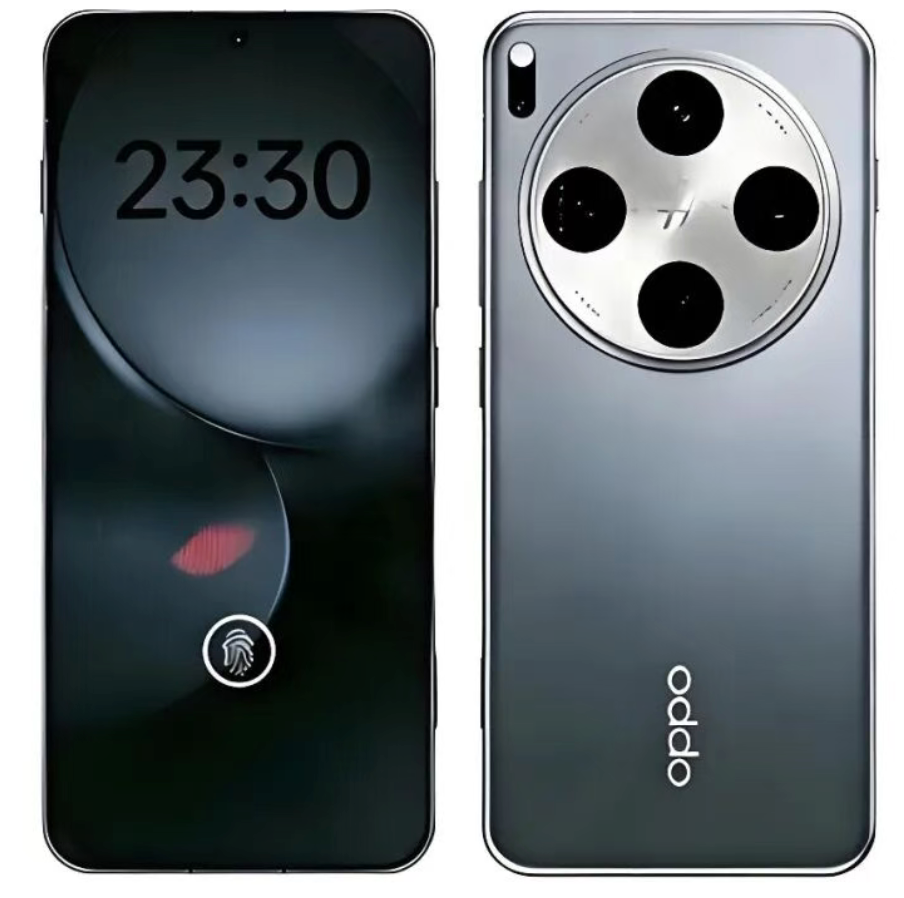
Recently, a photo of an engineering test unit circulating online has drawn a lot of attention. Although the body is heavily wrapped in confidentiality casings, the massive circular camera module is still impossible to miss. This design choice alone sends a very clear signal: OPPO isn’t making a phone with a camera this time—it’s making a professional camera that happens to make phone calls. And once you understand what’s packed inside that circular module, OPPO’s ambition becomes crystal clear.
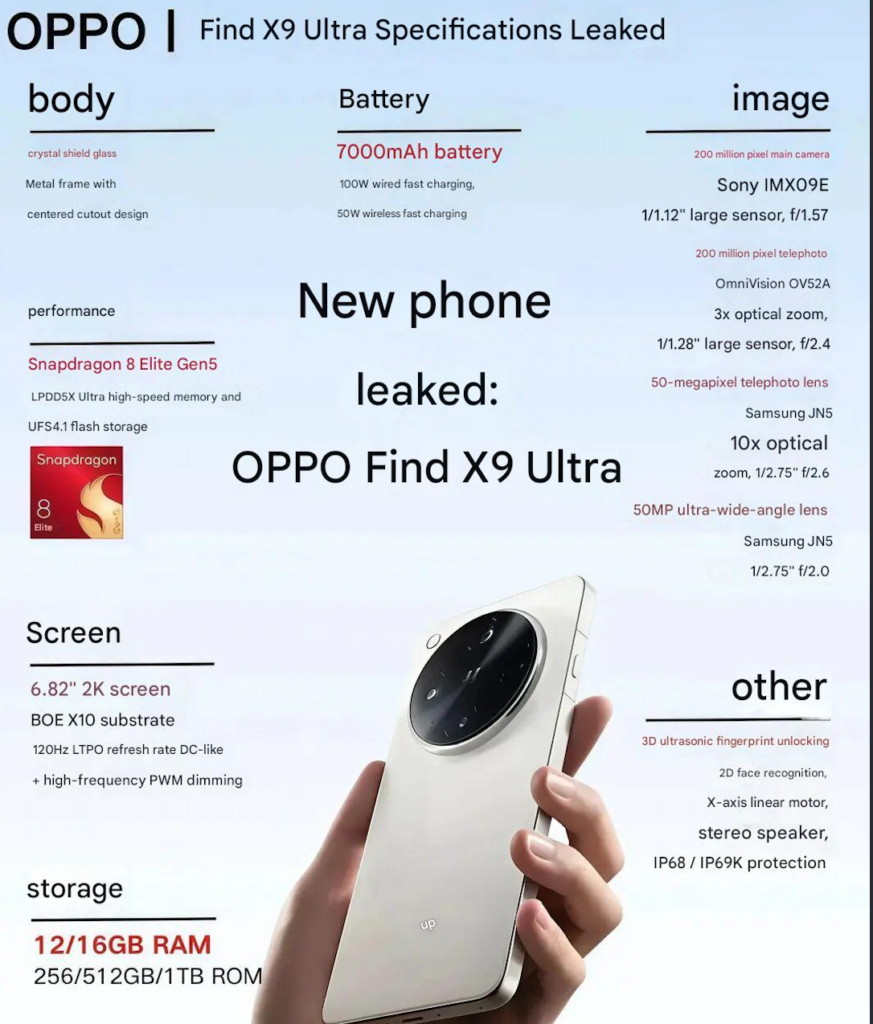
The most jaw-dropping highlight of the Find X9 Ultra is its dual 200-megapixel cameras. In the entire history of smartphones, no manufacturer has ever dared to equip a single phone with two sensors of such extreme specifications.
The main camera uses Sony’s flagship LYT-901 sensor, featuring a 1/1.12-inch ultra-large sensor paired with an f/1.5 ultra-wide aperture. Its light-gathering capability is said to surpass that of traditional 1-inch sensors. What does that mean in real use? It means that in dim café lighting, on nighttime streets, or under the complex lighting conditions of a live concert, this main camera can deliver remarkably clean image quality far beyond that of ordinary smartphones.
The second 200-megapixel camera is even more unconventional—a periscope mid-telephoto lens using the OmniVision OV52A sensor. With a 1/1.28-inch large sensor, it’s exceptionally rare in the telephoto category. This lens directly addresses a long-standing pain point in mobile photography: the dramatic drop in image quality between 5× and 9× zoom. Now, whether you’re capturing fine architectural details from afar or zooming in for a tight portrait, you can expect consistently sharp and detailed results across the range.
The return of 10× optical zoom feels more like a challenge letter from OPPO to the entire industry. Ever since Samsung dropped 10× optical zoom after the Galaxy S23 Ultra, this configuration has completely disappeared from the flagship phone market. Manufacturers have been forced to balance device thickness, cost control, and user demand—and most ultimately chose compromise.
OPPO, however, has deliberately taken the hardest path: not only bringing back 10× optical zoom, but pairing it with a 50MP high-spec sensor to ensure true telephoto image quality. Add to that a 50MP ultra-wide camera, and the Find X9 Ultra achieves full focal-length coverage from 0.6× to 10×, with flagship-level hardware backing every focal range.
But OPPO’s ambition doesn’t stop there. The addition of the Hasselblad professional teleconverter kit completely breaks the physical limits of mobile photography. The prominent “300” marking on the external teleconverter indicates an equivalent 300mm focal length, firmly entering the realm of professional super-telephoto lenses. Paired with a magnetic photography grip and a physical shutter button, the entire system delivers a control experience that comes remarkably close to that of a dedicated camera.
Imagine birdwatching in the wild, shooting a match in a stadium, or capturing the craters on the surface of the Moon—you no longer need to carry a heavy DSLR and bulky telephoto lenses. A smartphone plus a lightweight accessory kit can handle it all. This isn’t an imitation of professional cameras; it’s a redefinition of professional imaging equipment in a new form factor.
Backing this formidable imaging system is equally powerful hardware. The Qualcomm Snapdragon 8 Elite Gen 5 provides massive computing power for the Find X9 Ultra, while up to 24GB of LPDDR5X RAM ensures smooth multi-frame compositing and AI processing. With up to 1TB of UFS 4.1 storage, you can freely shoot 200MP photos and 8K video without worrying about space. The 6.82-inch 2K AMOLED flat display not only looks stunning, but also delivers an excellent visual experience for photo review and video editing.
Battery life is a top concern for heavy photography users, and the Find X9 Ultra offers a pleasantly surprising answer: 7,050mAh. That’s 41% more than the 5,000mAh battery in Samsung’s flagship Ultra model, and nearly double the capacity of Apple’s Pro Max. OPPO’s product leadership has previously stated that future flagship phones would feature batteries of no less than 7,000mAh—and this time, they’ve not only delivered, but gone beyond. Combined with 80W wired fast charging and 50W wireless fast charging, even extended shooting sessions won’t trigger battery anxiety.
Based on currently leaked designs, the Find X9 Ultra will come in orange, black, and brown, with a two-tone variant that carries a strong retro camera aesthetic. The front bezels are said to measure just 1.15mm, pushing the limits of manufacturing craftsmanship. While the overall weight has increased due to the large battery and complex camera system, the massive leap in imaging capability makes this trade-off more than worthwhile.
OPPO plans to hold a launch event in China this March, where it will officially unveil the Find X9 Ultra. Even more exciting is that this device will debut globally for the first time, with an official release expected in the second quarter.
This move signals that OPPO is formally taking the fight to international giants such as Samsung and Apple, aiming to compete for dominance in the high-end smartphone market with its top-tier imaging capabilities.

When we look back and examine the Find X9 Ultra as a whole, it becomes clear that this is more than a routine generational upgrade. Instead, it feels like a bold vision and practical experiment by OPPO for the future of mobile imaging.
Dual 200MP sensors tackle image quality head-on. 10× optical zoom fills long-standing focal-length gaps. The 300mm teleconverter pushes beyond physical limits. And the 7,050mAh battery ensures sustained creative shooting. Each breakthrough sends a clear message to the market: the ceiling of smartphone photography is far higher than we ever imagined.
As the core capabilities of professional cameras are gradually transplanted into smartphones—and as portability no longer comes at the cost of performance—a new era of mobile imaging may truly be arriving.
This March, let’s witness this moment together.