In the foldable smartphone space, there’s one pain point that has never truly gone away—the crease. No matter how manufacturers market their “crease-free” experiences, the moment you unfold the screen and run your finger across that faint groove in the center, there’s always a hint of disappointment.
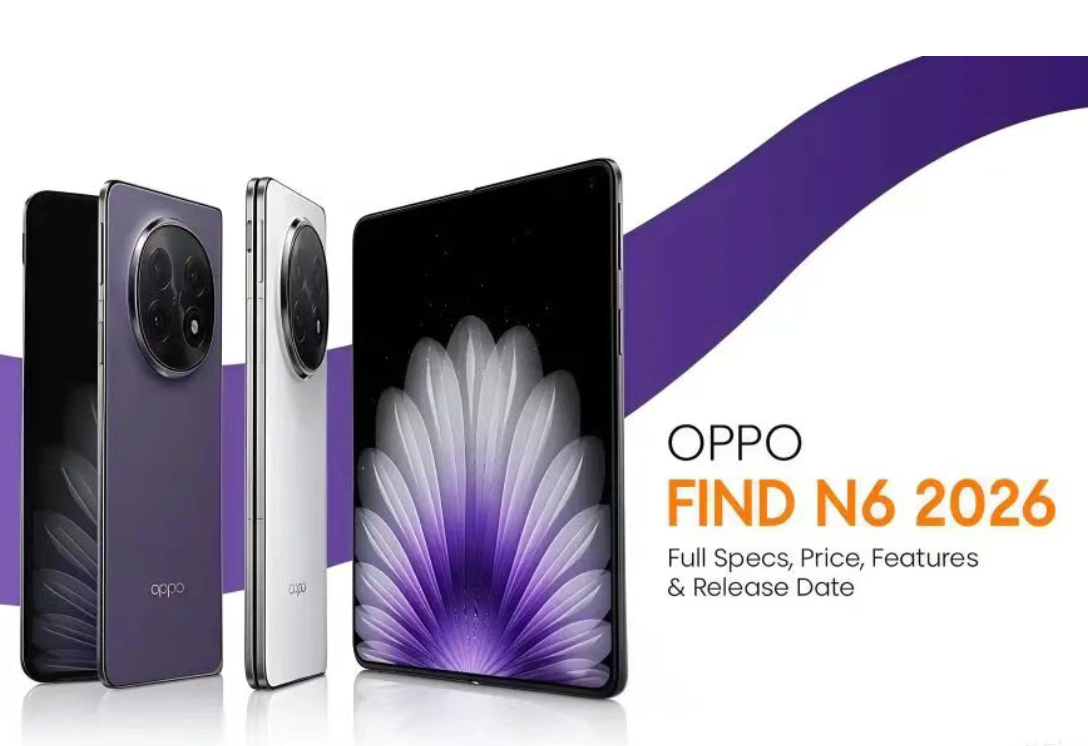
However, the OPPO Find N6, set to launch in March, appears ready to make a near-obsessive final push against this long-standing “industry flaw.” Even more surprising, reports suggest that Apple, a company known for its confidence and closed ecosystem, has quietly purchased the previous-generation Find N5 through non-public channels for teardown and research.
If this is the foldable display technology that even Apple is willing to “learn from,” just how far will it evolve this time?
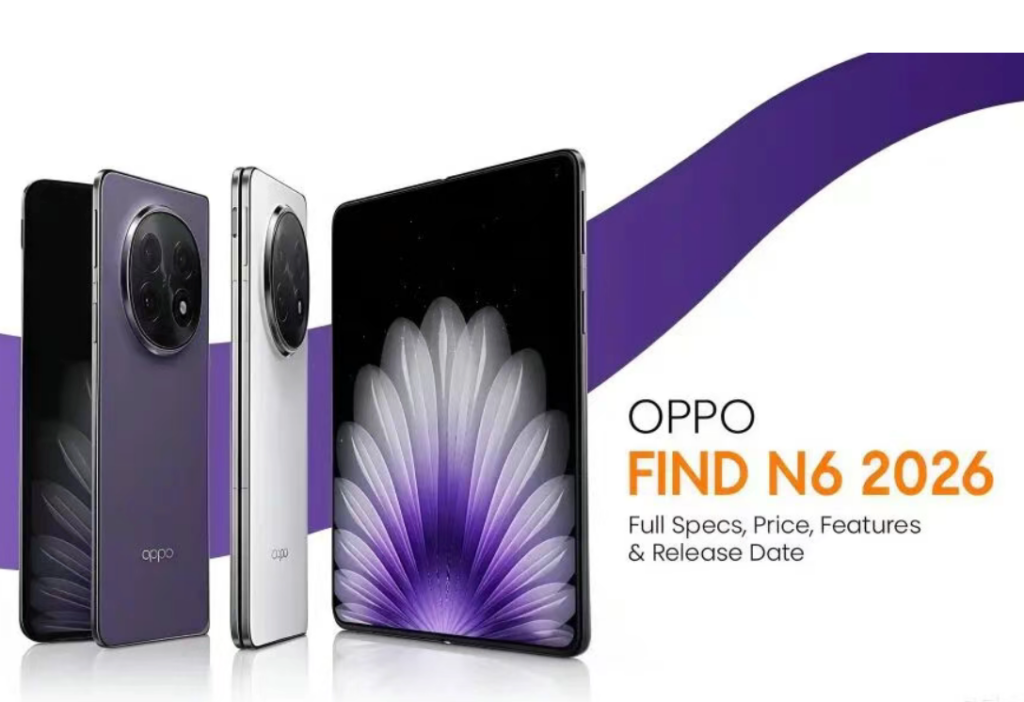
Recently, a statement by Zhou Yibao, head of OPPO’s Find series, sparked widespread attention across the industry. He used a vivid analogy to describe the crease issue on foldable displays: “It’s like pushing two beds together—on the surface it looks like one big bed, but that seam in the middle is always the most uncomfortable part.” This metaphor precisely hits the pain point felt by virtually every foldable phone user.
He then shifted tone, emphasizing the team’s strong commitment to crease optimization, and revealed that the OPPO Find N6 will deliver a brand-new experience with an “ultra-minimal crease.”
In fact, OPPO has already built up considerable expertise in crease control. On the previous Find N5, the crease depth was kept under 0.15mm, a figure that ranked among the industry’s best. The Find N6 is clearly aiming to go even further.
Based on current leaks, OPPO may have adopted a new droplet-shaped hinge design, combined with a larger folding radius and more advanced UTG ultra-thin glass, reducing the crease depth to a level almost imperceptible to the human eye. This extreme attention to detail is likely why even Apple is willing to spend time studying OPPO’s foldable technology.
Beyond crease control, the Find N6 spares no effort in its overall configuration. As the industry’s first large foldable phone powered by the Snapdragon 8 Elite Gen 5, the Find N6 will reach a new performance peak. This flagship chipset, paired with up to 16GB of RAM and 1TB of storage, ensures a smooth experience whether for daily use, multitasking, or heavy gaming. For foldable devices—naturally suited for split-screen operations—having such powerful performance reserves is especially crucial.
In terms of display, the OPPO Find N6 will feature an 8.12-inch 2K LTPO inner screen and a 6.62-inch outer screen. The inner display is covered with UTG ultra-thin glass and supports adaptive refresh rates, balancing visual quality with battery efficiency. Notably, both the inner and outer screens are equipped with 20MP front cameras, ensuring users can take selfies or make video calls whether the device is folded or unfolded.
The imaging system is another major highlight of the Find N6. The quad rear camera setup includes a 50MP main camera, a 50MP ultra-wide lens, a 200MP periscope telephoto, and a 2MP multispectral sensor. The inclusion of the 200MP periscope telephoto completely shatters the notion that “foldable = compromised photography.” This camera system not only delivers flagship-level resolution, but also uses Danxia True Color technology to achieve more accurate and natural color reproduction. For users who want both the portability and large-screen experience of a foldable phone without sacrificing photography, the Find N6 is an extremely compelling option.
Regarding battery life, the Find N6 packs a 6,000mAh dual-cell battery, which is top-tier for large foldables. Combined with 80W wired fast charging and 50W wireless charging, users can essentially say goodbye to battery anxiety. Impressively, despite the large-capacity battery, the Find N6 still weighs around 225 grams, which is outstanding among similar devices.
The Find N6 will offer two versions: a Standard Edition and a Satellite Communication Edition. The latter supports Beidou and Tiantong dual-mode satellite communication, allowing users to send emergency messages or stay connected in environments without terrestrial network coverage. This feature provides significant safety assurance for outdoor adventurers or those working in remote areas.
In terms of color options, the Find N6 will be available in Titanium, Deep Black, and Golden Orange. The Titanium finish continues the trend of high-end smartphones emphasizing metallic titanium aesthetics, offering a subtle yet premium visual appeal.
In a pre-launch teaser, Zhou Yibao also revealed an interesting detail: OPPO still has several tri-fold prototypes tucked away in their drawers. However, the team ultimately decided not to pursue a tri-fold design, choosing instead to focus all their efforts on perfecting the large foldable.
This “choose what to pursue and what to leave behind” product philosophy reflects OPPO’s deep understanding of foldable technology—rather than chasing gimmicks, it’s better to solve the real pain points for users.
Looking at all the upgrades in the OPPO Find N6, it’s clear that OPPO is trying to answer a fundamental question: Can a foldable smartphone truly embody the flagship experience, rather than merely being a product of “form-factor innovation”?
From ultra-minimal creases to a 200MP telephoto, from the Snapdragon 8 Elite Gen 5 to a 6,000mAh large-capacity battery, the Find N6 challenges traditional slab-style flagship phones in every dimension. When foldables no longer have obvious weaknesses, and both the unfolded and folded modes deliver top-tier experiences, that may well mark the true beginning of foldable adoption.
This March, let’s witness OPPO’s answer together.